
By Brenda Jackson, County Extension Coordinator and Agriculture and Natural Resources Agent, Murray County
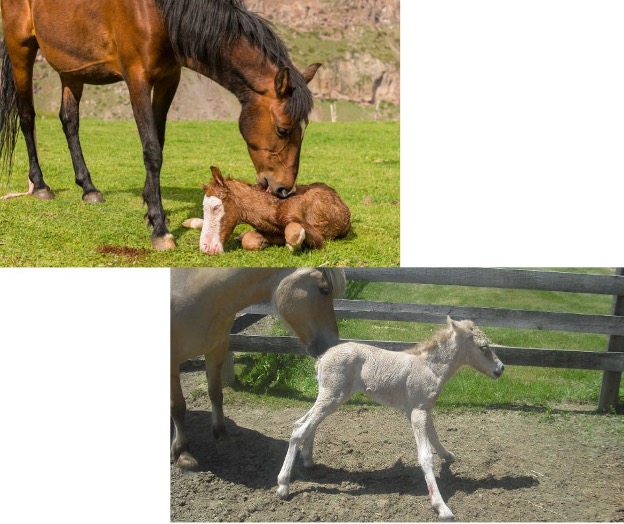
Raising a healthy foal starts with the foaling process. During and immediately after foaling are the two most critical points in that foals’ life. Start by considering the actual foaling process in stages. As the expected birth date closes in, start bringing the mare in at night to a large, clean, safe stall for foaling. If a stall is not available, move her to a foaling location about a month prior to her expected foaling date – it should have protection from both wet and cold weather, as well as predators. Stage 1 begins when the foal moves into position in the birth canal. You won’t know it’s happening but the mare does. She will become restless, pacing, maybe kicking at her abdomen or turning to look at her back end. She might even lay down and get up several times or roll as if she’s colicky. We switch to Stage 2 as the foal presents – the mare’s water breaks and the foal passes through the birth canal. The foal should appear quickly, within 20 minutes of the water breaking. If it does not, or if you see upside down feet (breech delivery) or red placental tissue (red bag), contact your veterinarian immediately for assistance. It is important to have that veterinary-client relationship established in advance, in case there is a different number you should call after hours. In a normal foal birth, you won’t have to do anything but watch, but it is important to be prepared and know who to call in case things don’t go according to plans.
Once the foal clears the mare, make sure the foal’s airways are clear, the foal is breathing normally and the umbilical cord breaks on its own. This most often happens when the mare stands up, and it breaks about an inch from where it attaches to the foal’s abdomen. If you must break it manually, you should stretch/pull at the intended break site to mimic natural breakage and reduce the possibility of bleeding. You will want to sanitize the umbilical stump with something like a 2% iodine solution or 0.5 percent chlorhexidine diluted 1 to 4 parts water, shortly after it is broken. It is important that you not interfere with the bond forming between mare and foal as some mares are very protective of their newborn foals. Give the mare and foal time to create a strong bond to ensure the foal is not rejected. If it’s cold and wet, the foal might appreciate your help in drying with an old towel or clean straw, rubbing briskly but gently. This is also an opportunity to begin the imprinting process, where you quietly and calmly introduce yourself to the foal, gently get them used to being handled and give the foal an opportunity to learn you can be trusted. This is also a good time to check the foals’ vitals to be sure conditions are normal: temperature 99-101.5F; heart rate greater than 60 beats per minute (bpm) 5 minutes post foaling and 80-120 bpm at 1-5 days post foaling; respiration 60-80 breaths per minute in the first 30 minutes, after than 30-40 breaths per minute. Other things to monitor: time to nurse within 2 hours for a normal birth; time to stand 60 minutes; suckling reflex should develop within the first 20 minutes, if not sooner.
For Stage 3, the mare should pass the placental mass on her own in 3 hours or less. If it takes longer than that, you should consult your veterinarian to see if oxytocin is recommended to stimulate uterine contractions. It is important that the mare passes the placenta on her own, never try to pull the placenta to assist in its delivery. If even a small piece of placenta is left behind, there is the potential for a uterine infection; be sure to inspect the placenta to ensure it is wholly intact after being expelled. As far as post-partum care is concerned, make sure the foal nurses to get that all-important colostrum for immunity development. It is also important to clean the mare’s udder and legs because as the foal is figuring out where to nurse, it could pick up surface bacteria from the mare.
That tiny little foal is your investment in the future. You want to be sure to give it the best possible start so take the time to ensure passive transfer of immunity takes place. What does that mean? Colostrum present in the mare’s first milk is key to the development of the foal’s immune system. Those colostrum antibodies are indicative of the pathogens that mare has been exposed to either naturally or by vaccination and are then passed along to the foal. Your new foal should stand within an hour of birth and begin nursing soon after that. Not just nosing around but actively looking for the udder – ensure there is a visible seal from mouth to teat and actual swallowing, you can put your hand on their throat and feel it. If you see an udder that is full and tight, odds are that effective nursing has not taken place. Your foal only has about 12-24 hours for the gut to absorb those antibodies before the intestinal walls begin to close. If you know the foal did not get colostrum, maybe the mare died during birth or is otherwise unable to nurse, then it’s important to provide supplemental colostrum, preferably from another mare on your farm to ensure the foal gets antibodies from possible pathogens in its current environment. If you are just not sure, maybe the mare foaled in the pasture unexpectedly or has been leaking colostrum prior to foaling (examples leading to Failure of Passive Transfer-FPT), your veterinarian can run an IgG test within 48 hours from birth to see what antibody levels are and possibly provide plasma products, if needed. In cases of FPT, foals are more susceptible to infections and, in severe cases, septicemia. Septicemia is where bacteria has entered the bloodstream and spreads through the body, which can be fatal in severe cases.
The next step in good foal health relates to nutrition. If you are meeting your broodmare’s nutritional needs, then she will have no problem meeting her foal’s needs. Remember that she is eating for two and should maintain a body condition score (BCS) of 5.5-6.5. Lactation significantly increases the mare’s nutrient needs, so it is critical to provide good quality forage and supplemental concentrate in early lactation. For the first 90 days or so, the foal won’t need any hay or feed concentrate, just mother’s milk. Be sure they are nursing 5-10 times per hour to get the nutrients it needs and prevent digestive upset. Foals are curious creatures and will explore their surroundings as confidence builds, so you will likely find them taste testing their mothers’ feed and forage within the first 3 months. They will start nursing less while eating more hay and feed concentrate. To ensure a healthy foal, preparation starts before their feet even hit the ground. Once they get here, all they need are a strong immune system, good nutrition and plenty of room to run and grow. If you ever have any questions about the health of your animals, always contact your local veterinarian or a trusted equine health professional.