
By Robyn Stewart, Ph.D., County Extension Coordinator and ANR Agent, Lincoln County
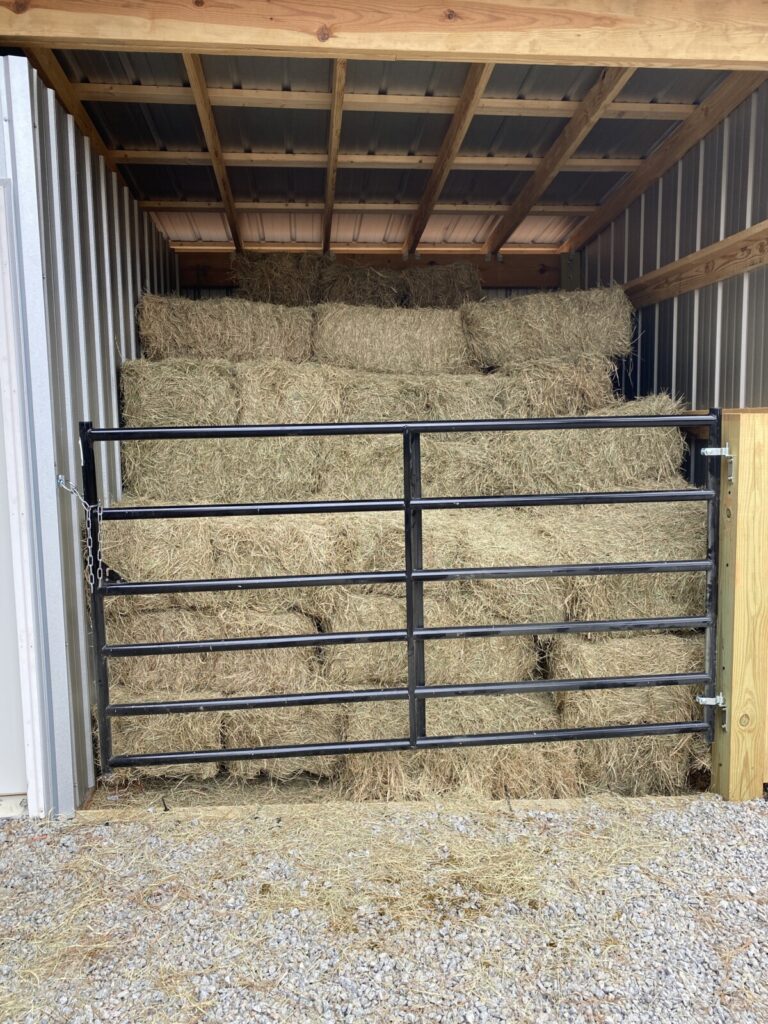
In recent years, horse owners have gained access to a wider variety of hay species than ever before. Improvements in transportation and distribution networks have made it possible for horse owners throughout the Southeast to purchase hays produced in other regions of the country. As a result, species such as timothy and orchardgrass, which do not grow well in Georgia’s climate, are widely available through hay distributors and feed suppliers. Although these imported hays may vary in price depending on transportation costs and market conditions, they are readily accessible to many horse owners, providing additional feeding options. This availability has also contributed to growing interest in identifying the “best” hay species for horses.
With so many options available, it is easy to assume that selecting the right hay species is the most important factor in developing a feeding program. While hay species certainly influence nutritional composition, species alone does not determine forage quality. In fact, variation within a single hay species can sometimes be just as important as the differences observed between species.
Understanding the strengths and limitations of various forage species can help horse owners make informed purchasing decisions. More importantly, understanding the factors that influence hay quality can help owners focus on what truly matters when selecting forage for their horses.
Why Forage Matters
Before discussing individual hay species, it is important to understand two principles that should guide forage selection and feeding decisions. First, horses should be fed according to their digestive anatomy. Second, feeding programs should be designed to meet the nutrient requirements of the horse rather than to feed a specific hay species. These concepts provide the foundation for evaluating forage quality and selecting appropriate feeds.
Horses evolved as grazing herbivores, consuming small amounts of fibrous plant material throughout much of the day. Unlike ruminant livestock species, horses are hindgut fermenters and rely on microbial populations within the hindgut to digest structural carbohydrates, or fiber. Through this process, fiber is fermented into volatile fatty acids that can be utilized as an important energy source by the horse. In addition to energy, good-quality forage can provide substantial amounts of protein, essential amino acids, vitamins, and minerals, making it a major contributor to overall nutrient intake (NRC, 2006).
Beyond its nutritional value, forage plays a critical role in maintaining digestive and oral health. The act of chewing forage stimulates saliva production, which helps buffer stomach acid and supports normal digestive function. Horses consuming forage-based diets also spend more time chewing than horses fed large concentrate meals, helping promote natural tooth wear and reducing the risk of behavioral issues associated with limited forage access (Witherow, 2025). Because forage contributes to both nutrient intake and digestive health, the quality and quantity of forage available to a horse can have substantial impacts on overall health, body condition, and performance.
Interest in forage-first and forage-based feeding programs has grown considerably. These approaches emphasize maximizing forage intake and using concentrates only when necessary to meet nutrient requirements not supplied by forage. While forage can provide a substantial proportion of the nutrients required by many horses, no single feeding strategy is appropriate for every situation. Growing horses, lactating mares, performance horses, and horses with specific health concerns may require additional supplementation to meet their nutritional needs. Regardless of the feeding program utilized, forage should remain the foundation of the equine diet. As a result, forage quality influences nutrient intake, digestibility, voluntary consumption, and the extent to which additional supplementation may be necessary. For example, highly digestible, nutrient-dense forage may meet a greater proportion of a horse’s nutrient requirements than mature, stemmy forage of the same species.
Understanding Hay Species
Hay is simply forage that has been cut, dried, and stored for later feeding. Hay species are commonly categorized according to plant type and growing season. Historically, the hay available to horse owners was largely determined by local growing conditions, as forage species differ in their adaptation to climate, soils, and management systems. However, advances in transportation and hay distribution have dramatically expanded forage options, making it common for horse owners to purchase hay produced far from where it is ultimately fed. As a result, horse owners today have access to a wider variety of forage species than ever before.
Broadly speaking, hays can be classified as legumes, cool-season grasses, or warm-season grasses. While these categories exhibit some general differences in nutritional characteristics, species alone does not determine forage quality. Nutritional values reported for hay species typically represent averages or ranges observed under specific growing and management conditions. Consequently, the nutritional differences commonly attributed to forage species should be viewed as general tendencies rather than fixed characteristics. Understanding the strengths and limitations of common forage species is useful, but evaluating overall forage quality remains more important than focusing on species alone.
Legume Hays
Legume hays differ from grass hays in both plant physiology and management requirements. Unlike grasses, legumes are capable of fixing atmospheric nitrogen through a symbiotic relationship with Rhizobium bacteria. Common legume hays fed to horses include alfalfa and perennial peanut. Average nutrient composition values for common legume hays are presented in Table 1.
Alfalfa is the most widely recognized legume hay in North America and is commonly incorporated into feeding programs for growing horses, lactating mares, performance horses, and other horses with elevated nutrient requirements. Perennial peanut is a warm-season legume adapted to the southeastern United States and is often referred to as the “alfalfa of the South.”
Table 1. Average Nutrient Composition of Selected Legume Hays Reported by the Equi-Analytical Forage Database
| Species | Crude Protein (%) | Acid Detergent Fiber & Neutral Detergent Fiber | Calcium | Average Energy (DE, Mcal/lb) |
| Alfalfa | 20% | 30.5% and 38.3% | 1.5% | 1.19 |
| Perennial Peanut | 14% | 32% and 42% | 0 | 1.1 |
| Variability | 6% | 1.5% and 3.7% | 0.2% | 0.09 |
Cool-Season Grass Hays
Cool-season grasses include species such as timothy, orchardgrass, fescue, and ryegrass. These forages are most productive during periods of cooler temperatures and are commonly grown throughout the northern United States and other regions with moderate summer conditions. Average nutrient composition values for common cool season hays are presented in Table 2.
Timothy and orchardgrass are among the most widely recognized horse hays in North America and are frequently marketed to horse owners. Tall fescue is commonly utilized in hay and pasture systems throughout portions of the eastern United States, although endophyte-infected fescue should be avoided when feeding pregnant mares due to the risk of fescue toxicosis. Ryegrass is commonly utilized as both a pasture and hay species and has gained popularity in some equine feeding programs.
Table 2. Average Nutrient Composition of Selected Cool-Season Grass Hays Reported by the Equi-Analytical Forage Database
| Species | Crude Protein | Acid Detergent /Neutral Detergent Fiber | Calcium | Energy (DE, Mcal/lb) |
| Timothy | 9.6% | 41.5% and 66.52% | 0.25% | 0.9 |
| Orchardgrass | 13% | 40% and 60% | 0.26% | 0.97 |
| Fescue | 11.9% | 35% and 64% | 0.37% | 0.9 |
| Ryegrass | 12.7% | 37% and 60% | 0.43% | 0.96 |
Warm-Season Grass Hays
Warm-season grasses dominate forage production throughout much of the southeastern United States and other regions characterized by hot summers and extended growing seasons. Common warm-season grass hays fed to horses include bermudagrass, bahiagrass, and teff. Average nutrient composition values for common warm season hays are presented in Table 3.
Bermudagrass is one of the most widely produced horse hays in the Southeast. Historical reports associated coastal bermudagrass hay with ileal impactions in horses; however, more recent evidence suggests that forage maturity and resulting fiber concentrations may be more important contributors to impaction risk than bermudagrass itself. Recent research from the University of Georgia also found that horses required fewer chews per kilogram when consuming bermudagrass hay than several other common hay species, although additional research is needed to determine whether these differences influence digestive health or reflect variation in forage characteristics. Bahiagrass is commonly utilized in pasture and forage systems throughout the Southeast, while teff has gained popularity among horse owners in recent years.
Table 3. Average Nutrient Composition of Selected Warm-Season Grass Hays Reported by the Equi-Analytical Forage Database
| Species | Crude Protein | Acid Detergent /Neutral Detergent Fiber | Calcium | Energy (DE, Mcal/lb) |
| Teff | 16% | 36% and 56.6% | 0.53% | 0.93 |
| Bermudagrass | 10% | 43% and 70% | 0.49% | 0.84 |
| Bahiagrass | 9.7% | 41% and 70% | 0.29% | 0.88 |
Between Species and Within Species Variability
Several general trends emerge when comparing forage classes. As illustrated in Tables 1–3, legumes are generally associated with greater crude protein and calcium concentrations than grass hays, although overlap exists among forage classes. Likewise, cool-season and warm-season grasses may differ in fiber concentrations, nonstructural carbohydrate (NSC) content, and energy density.
Although Tables 1–3 demonstrate some general nutritional differences among forage classes, variation within a species can be equally important. Data from Equi-Analytical Laboratories demonstrate this concept well in Table 4. Among bermudagrass hay samples, crude protein concentrations ranged from 8.6% to 14.4%, nonstructural carbohydrate concentrations ranged from 8.9% to 17.1%, and digestible energy ranged from 0.87 to 1.00 Mcal/lb.
Table 4. Within Species Variation of Bermudagrass Hay Samples from Equi-Analytical
| Crude Protein | Acid Detergent /Neutral Detergent Fiber | NSC | Calcium | Energy (DE, Mcal/lb) | |
| LOW | 8.6% | 31.4% and 61.3% | 8.9% | 0.37% | 0.87 |
| HIGH | 14.4% | 38.8% and 70.2% | 17.1% | 0.59% | 1.0 |
| Difference | 5.8% | 7.4% and 8.9% | 8.2% | 0.22% | 0.13 |
The nutritional value of hay varies both between species and within species. While species can provide useful information about the general characteristics of a forage, species alone cannot predict the nutrient composition of a specific lot of hay. Two bermudagrass hay lots may differ more in protein, energy, or carbohydrate concentrations than the average differences observed between forage classes. For this reason, forage species should be viewed as a starting point rather than a definitive measure of quality. When nutritional precision is important, forage analysis remains the most reliable method for evaluating hay and matching it to a horse’s needs.
What Causes Variation Within a Hay Species?
If species alone does not determine forage quality, what factors do?
While species influences nutrient composition, it is only one factor affecting forage quality. Differences caused by harvest maturity, environmental conditions, fertility, harvest management, and storage practices may equal or exceed the differences observed between forage species. Understanding these factors helps explain why two lots of the same hay may differ dramatically in nutritional value.
Perhaps the most important factor affecting forage quality is maturity at harvest. As forage plants grow, they progress from vegetative stages focused primarily on leaf production to reproductive stages characterized by stem elongation, flowering, and seedhead development. During vegetative growth, plants generally contain a greater proportion of leaves, which tend to be more digestible and nutrient-dense than stems. As plants mature, stem development increases, fiber concentrations rise, and digestibility declines. Crude protein and energy concentrations also tend to decrease. As a result, hay harvested at an early stage of growth is often more nutrient-dense than hay harvested after plants have reached maturity or produced seedheads (Ball et al., 2007).
This relationship helps explain why two bales of the same hay species may differ dramatically in feeding value. A bermudagrass field harvested at the appropriate stage of maturity may produce highly digestible hay suitable for many classes of horses. The same field harvested several weeks later may produce hay with substantially greater fiber concentrations and lower digestibility which carries a higher risk for causing digestive disturbances.
Soil fertility and plant nutrition also influence forage quality. Adequate fertility supports plant growth and can contribute to improved nutrient concentrations within harvested forage. Likewise, environmental conditions such as drought, excessive rainfall, temperature extremes, and growing conditions throughout the season may influence nutrient composition and forage production (Ball et al., 2007). In many cases, these factors also affect harvest timing and management. For example, prolonged rainfall may delay cutting and baling, resulting in more mature forage than originally intended. Similarly, drought conditions may alter plant growth patterns and influence both yield and forage quality. As a result, environmental conditions can affect forage quality both directly through plant growth and indirectly through harvest management decisions.
Storage practices can also influence the condition and acceptability of hay after harvest (Ball et al., 1998). While the nutrient composition of properly cured hay often remains relatively stable during storage, exposure to moisture, poor ventilation, and weathering can contribute to mold growth, dust, spoilage, and reduced palatability. As a result, horses may be less willing to consume affected hay, and in some situations moldy or dusty forage may pose health concerns. Even hay harvested at an ideal stage of maturity can become less suitable for feeding if stored improperly.
Taken together, these factors help explain why forage quality can vary substantially within a single species. Understanding these influences reinforces an important concept: hay species provides useful information, but management practices often determine the final nutritional value of the forage. Please stay tuned for Part 2 of this series where we will discuss how to assess the nutritional value of your forages.
References
Ball, D.M., Bade, D. N., Lacefield, G. D., Martin, N. P., and B. W. Pinkerton. 1998. Minimizing Losses in Hay Storage and Feeding. National Forage Information Circular 98-1. Graphic Center, Sacramento, CA.
Ball, D.M., Hoveland, C. S., Lacefield, G., D. 2007. Southern Forages: Modern Concepts for Forage Crop Management. IPNI.
Ermers, C., McGilchrist, N., Fenner, K., Wilson, B., & McGreevy, P. (2023). The Fibre Requirements of Horses and the Consequences and Causes of Failure to Meet Them. Animals, 13(8), 1414. https://doi.org/10.3390/ani13081414
Henneke, D. R., Potter, G. D., Kreider, J. L., & Yeates, B. F. 1983. “Relationship Between Condition Score, Physical Measurements and Body Fat Percentage in Mares.” Equine Veterinary Journal 15 (4): 371–372. https://doi.org/10.1111/j.2042-3306.1983.tb01826.x
Liburt, N. 2026. Nutritional Requirements of Horses and Other Equids. Merck Veterinary Manual. https://www.merckvetmanual.com/management-and-nutrition/nutrition-horses/nutritional-requirements-of-horses-and-other-equids#For-More-Information_v51038865
Martinson K, Wilson J, Cleary K, Lazarus W, Thomas W, Hathaway M. 2012. Round-bale feeder design affects hay waste and economics during horse feeding. Journal of Animal Science. 1;90(3):1047-55. https://doi.org/10.2527/jas.2011-4087
National Research Council. 2007. Nutrient Requirements of Horses. 6th rev. ed. Washington, DC: National Academies Press. https://doi.org/10.17226/11653
Phillips, S. 2019. Weight Loss Strategies in Horses. J. Anim. Sci. 97(3). https://doi.org/10.1093/jas/skz258.264
Wassel, B. 2017. Solubilization of nonstructural carbohydrates as a function of soaking interval and water temperature in southern forages commonly fed to equids. Thesis. Auburn University. https://etd.auburn.edu/bitstream/handle/10415/5732/Wassel%2C%20Brooklyne%20Thesis%20.pdf?sequence=2&isAllowed=y
Witherow, B. 2025. The Significance of Chewing in Horses. UK Vet Equine. 9(1) https://doi.org/10.12968/ukve.2024.0035